POS for Retail
 Sales Hub
 Product Hub
 Inventory Management
 Whatsapp Marketing
 Marketing Automation
 Browser Notification
 Email Marketing
 Fusion Mail
 SMS Marketing
 Fusion SMS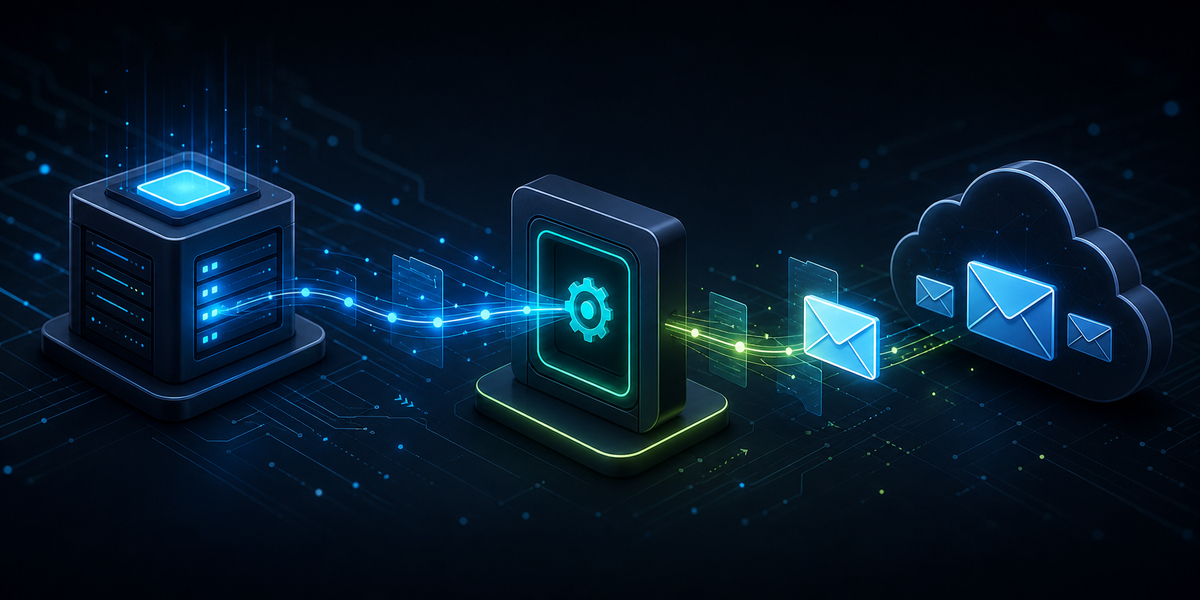
How Does API-Based Email Integration Work?
Learn how to send transactional emails with API keys, template IDs, and dynamic variables while improving reliability and scalability.
API-based email integration means an application sends a programmatic request to an email service whenever a specific event occurs. When a user signs up, places an order, requests a password reset, updates their account, or completes a payment, the application does not manually build and send the entire email each time. Instead, it communicates with an email API, passing the appropriate template ID along with the data required to personalize the message.
This approach creates a cleaner and more scalable architecture. Rather than embedding email content directly into application code, businesses can separate communication management from application logic. As a result, developers can focus on application functionality while marketing, operations, or customer experience teams manage email content independently.
Fusion Email makes this workflow straightforward for developers and operational teams alike. Organizations can define and manage email templates centrally through a dedicated dashboard. Each template receives a unique identifier that can be referenced by the application. When an event occurs, developers authenticate using an API key, select the relevant template ID, and submit dynamic variables such as customer name, order number, invoice amount, tracking information, verification codes, account details, or password reset links.

Fusion Email automatically combines the selected template with the provided variables and generates the final email in real time. This process ensures that users receive accurate, personalized, and consistent communications regardless of the workflow being triggered. A single template can support thousands or even millions of email deliveries while dynamically adapting its content to each recipient.
One of the biggest advantages of API-driven email delivery is operational consistency. Email content no longer needs to be hardcoded within the application. Template updates can be performed from a centralized management panel without requiring software deployments or code modifications. This reduces maintenance overhead, minimizes the risk of inconsistencies, and allows teams to update branding, wording, or messaging more efficiently.
The API-first approach also improves scalability. As applications grow and additional communication workflows are introduced, new transactional emails can be deployed simply by creating new templates and connecting them to application events. This allows organizations to expand their communication infrastructure without increasing development complexity.

Another major benefit of API integration is visibility and measurement. Every email event can be logged and tracked throughout its lifecycle. Teams can monitor delivery times, analyze bounce activity, review open behavior, and compare provider-specific performance across Gmail, Outlook, Yahoo, iCloud, and other email providers. This level of visibility helps organizations identify delivery issues, optimize performance, and improve the overall reliability of their email infrastructure.
For growing SaaS platforms, e-commerce businesses, marketplaces, subscription services, and enterprise applications, these insights become increasingly valuable. Understanding how quickly critical emails are delivered, which providers experience delays, and where delivery problems occur allows teams to make data-driven decisions instead of relying on assumptions.
Fusion Email is therefore more than a tool for sending emails. It serves as a transactional communication infrastructure that connects application events with reliable email delivery, centralized template management, detailed analytics, and operational visibility. By combining developer-friendly APIs with measurable performance data, Fusion Email helps organizations build faster, more reliable, and more scalable communication workflows.