POS for Retail
 Sales Hub
 Product Hub
 Inventory Management
 Whatsapp Marketing
 Marketing Automation
 Browser Notification
 Email Marketing
 Fusion Mail
 SMS Marketing
 Fusion SMS
Which Businesses Should Use Product Hub?
Learn how Product Hub helps retail, e-commerce, and multi-store businesses centralize product data, inventory, and operations.
Product Hub is designed for businesses that manage a growing number of products and need a centralized way to organize product information. A simple spreadsheet may be enough when a business has only a small catalog and limited inventory activity. However, as product catalogs expand and operations become more complex, managing product data manually becomes increasingly difficult. Categories, brands, suppliers, variants, pricing structures, barcodes, QR codes, inventory records, and sales channels all create additional layers of complexity that require a more structured approach.
As businesses grow, product information often becomes scattered across multiple tools and departments. Product details may live in spreadsheets, inventory data may be stored in a separate system, e-commerce teams may maintain their own records, and warehouse teams may rely on different processes. This fragmentation creates inefficiencies, increases the risk of errors, and makes it harder to maintain consistent product information across the organization.
Product Hub addresses this challenge by providing a single platform where product data can be managed, updated, and accessed by different teams. Instead of working with disconnected records, businesses can create a centralized source of product information that supports inventory management, pricing, reporting, and sales operations.
Retail businesses can use Product Hub to improve store-based inventory tracking, barcode management, and product performance reporting. For organizations operating multiple locations, having visibility into where products are available and how inventory levels change across stores is essential. Product Hub helps retail teams monitor stock availability, track product movement, and maintain more accurate product records across the business.
Multi-store operations benefit particularly from centralized product visibility. Teams can identify inventory imbalances, understand location-specific demand, and make more informed replenishment decisions. This improves operational efficiency while reducing the risk of stock shortages or excess inventory.
E-commerce businesses can use Product Hub as a central hub for catalog management and multi-channel sales operations. Product descriptions, images, variant structures, pricing models, e-commerce attributes, XML imports, and channel visibility settings can all be managed from a single platform. This allows teams to launch products more efficiently and maintain greater consistency across digital sales channels.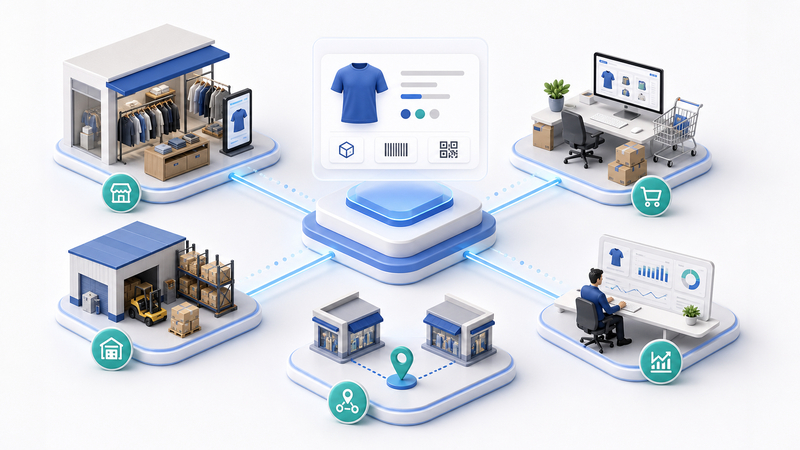
For businesses selling through websites, marketplaces, and other online channels, centralized product data helps reduce duplication and ensures that product information remains accurate wherever it is displayed. As product catalogs grow, this consistency becomes increasingly important for both customer experience and operational efficiency.
Warehouse and operations teams also benefit from Product Hub's capabilities. Barcode workflows, QR code access, invoice-based stock entry, and centralized inventory records help make product movements easier to track and verify. These features improve traceability throughout the inventory process while reducing the amount of manual checking required between departments.
Having product identity, inventory activity, and operational records connected within a single system also improves inventory accuracy and creates a clearer audit trail for stock movements. This visibility becomes particularly valuable as inventory volumes increase and operations become more complex.
Product Hub is equally valuable for managers and decision-makers who rely on operational data. Dashboard metrics, product sales reports, catalog health indicators, product photo coverage rates, recently added products, inventory planning data, and pricing history provide a clearer understanding of business performance. Instead of relying on fragmented reports from different systems, teams can access meaningful insights from a centralized environment.
These insights help businesses identify top-performing products, understand category trends, monitor inventory health, and make more informed decisions about purchasing, pricing, and growth strategies. Data becomes more actionable when product information, inventory activity, and reporting are connected.
In short, Product Hub is built for businesses whose product data has become too important to leave scattered across disconnected tools. Whether the goal is improving inventory visibility, managing e-commerce catalogs, supporting retail operations, or enabling better reporting, Product Hub provides a centralized foundation for managing product information at scale. As businesses grow, it helps transform product data from a collection of records into a strategic operational asset.