 WDC Pos
 Sales Hub
 Product Hub
 Inventory Management
 Whatsapp Marketing
 Marketing Automation
 Browser Notification
 Email Marketing
 Fusion Mail
 SMS Marketing
 Fusion SMS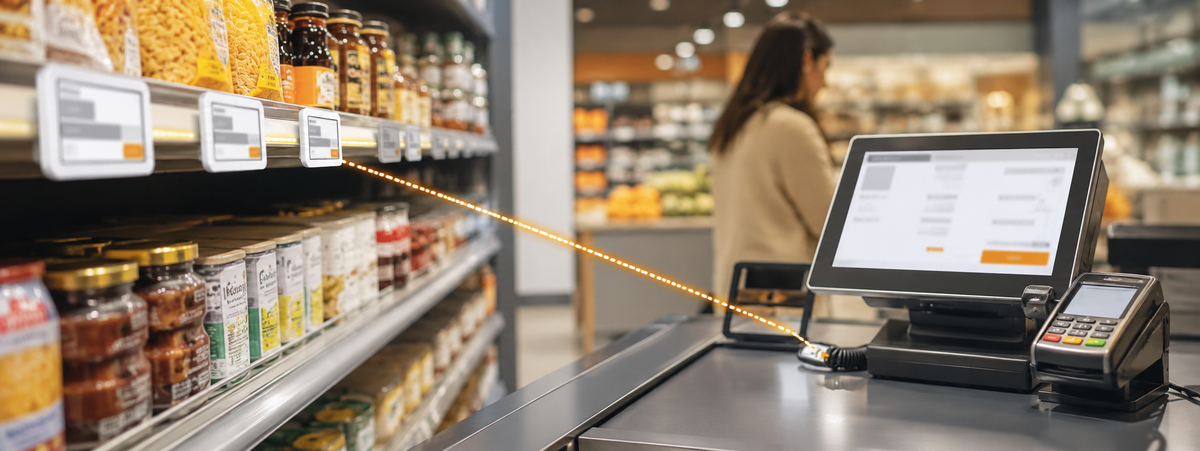
How Digital Price Screens Improve Price Accuracy in Retail
See how digital price screens help retailers keep shelf prices, promotions, and checkout data aligned across stores.
Why Price Accuracy Matters
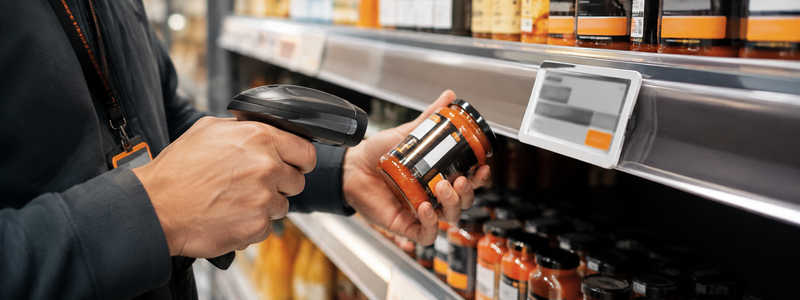
Price accuracy is one of the simplest ways a retailer earns trust. Customers expect the price on the shelf to match the price at checkout. When it does not, the issue becomes more than a small operational mistake. It can create complaints, refunds, staff interruptions, and lower confidence in the store.
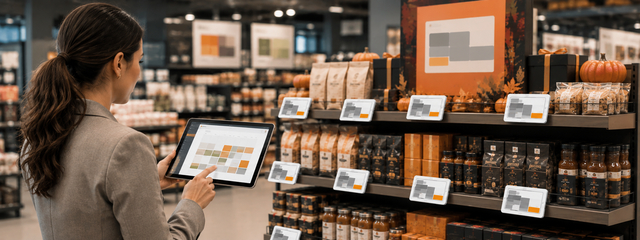
Digital price screens help by making shelf pricing part of a controlled data flow instead of a manual printing task.
Where Price Errors Usually Come From
Retail price errors often happen because the shelf and the system are updated at different speeds. A promotion may be active in POS but not visible on the shelf. A supplier cost change may update the product database but not reach the printed label. A store team may miss one aisle during a large campaign change.
Digital price screens reduce these delays by letting teams update displayed prices from a central source.
How WDC Digital Price Screen Helps
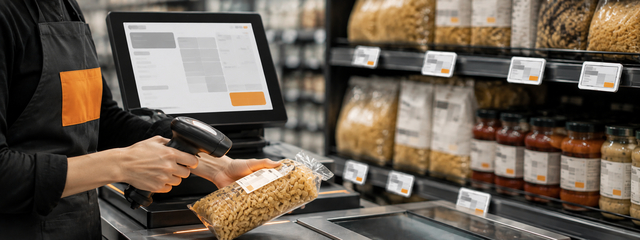
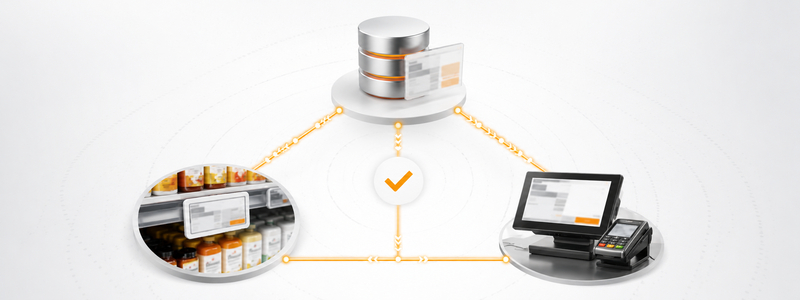
WDC Digital Price Screen can support price visibility close to WDC services such as Product Hub, POS for Retail, Sales Hub, and Inventory Management. This matters because accurate shelf communication depends on accurate product data behind it.
When the display layer is connected to the retail data layer, stores can manage:
- Product names and prices
- Campaign prices
- Stock-related messaging
- Category or aisle updates
- Multi-store price consistency
FAQ
What is retail price accuracy? Retail price accuracy means the price shown to the customer matches the price charged at checkout.
Can digital screens help with promotions? Yes. They make promotion changes easier to display quickly and consistently.
Business Context for Retail Teams
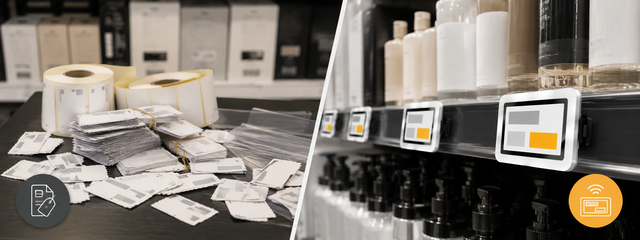
A digital price screen decision should be evaluated as part of the wider retail operating model, not only as a hardware purchase. The core issue is price accuracy, checkout trust, and reducing shelf-system mismatch. When pricing information is handled manually, every change creates a small operational dependency: someone must receive the new price, create the label, place it correctly, check it, and remove it when the offer ends. A digital price screen reduces that dependency by making the shelf display part of a connected pricing workflow.
For a retail decision maker, the important question is not simply "Should we replace paper?" The better question is: "How often does our store need to change what customers see at the shelf, and how much risk do we create when that process is manual?" That question makes the business case clearer. Stores with frequent campaigns, large product ranges, multi-location operations, or strict price accuracy requirements usually feel the pain earlier.
Where This Fits in the Store Workflow
A digital price screen works best when it is connected to the systems that already hold product, price, campaign, and stock information. In the WDC environment, that may include Product Hub for product data, POS for Retail for checkout alignment, Sales Hub for sales visibility, and Inventory Management for stock-related operations. The screen should be the visible layer of a controlled workflow, not a separate place where teams type prices again.
Useful workflow examples include:
- POS price alignment
- promotion corrections
- category updates
- customer complaint reduction
These use cases matter because the shelf is where operational data becomes customer-facing. A price may be correct in a spreadsheet, product database, or POS system, but it only earns customer trust when the same information appears clearly in the store.
Implementation Considerations
Before rolling out digital price screens, the retailer should define ownership. Who controls the price? Who approves campaign messages? Who checks that the display is attached to the correct product? Who handles exceptions when a store needs a local adjustment? These questions sound operational, but they determine whether the system creates order or simply moves manual work into another tool.
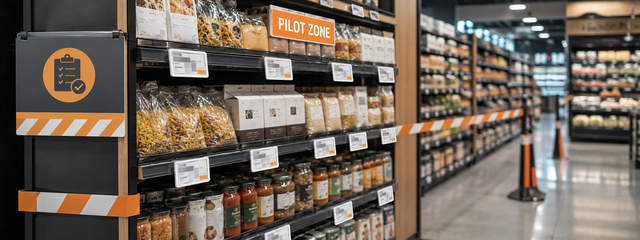
Start with one category or store area. Choose a place where price changes happen often enough to prove value. During the pilot, measure how long updates take, how many manual steps disappear, and whether store staff can handle routine changes without confusion. After that, expand category by category.
Common Mistakes to Avoid
The most common problems are rarely about the screen itself. They usually come from weak process design:
- using outdated product data
- running campaigns without shelf checks
- leaving ownership unclear between HQ and store teams
Avoiding these mistakes keeps the project grounded. The goal is not to make the shelf look more digital. The goal is to make price communication more accurate, faster to manage, and easier for customers to understand.
How to Measure Success
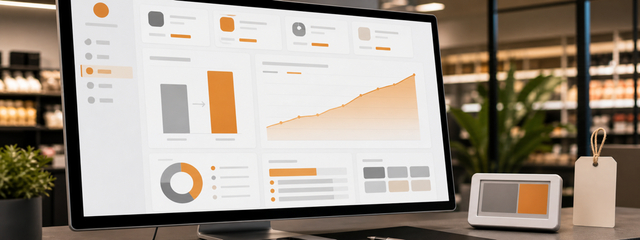
Retailers should measure digital price screen performance with operational and customer-facing metrics. Useful metrics include price update time, number of manual label changes avoided, price mismatch incidents, campaign launch speed, staff interruptions caused by price questions, and the number of outdated shelf messages found during checks.
A useful baseline is the current manual process before rollout. Count how many people are involved in a typical price change, how long the change takes from approval to shelf visibility, how often old labels remain in place, and how many customer questions relate to price clarity. After installation, compare the same indicators category by category. This makes the value visible in daily operations, not only in a technology budget.
Conclusion
Digital price screens are most valuable when they solve a real operational problem. They help stores reduce manual labeling, keep shelf communication aligned with internal systems, and support clearer campaigns. For retailers planning a more connected store environment, WDC Digital Price Screen can act as the customer-facing display layer of a broader retail management workflow.