
 WDC Pos
 Sales Hub
 Product Hub
 Inventory Management
 Whatsapp Marketing
 Marketing Automation
 Browser Notification
 Email Marketing
 Fusion Mail
 SMS Marketing
 Fusion SMS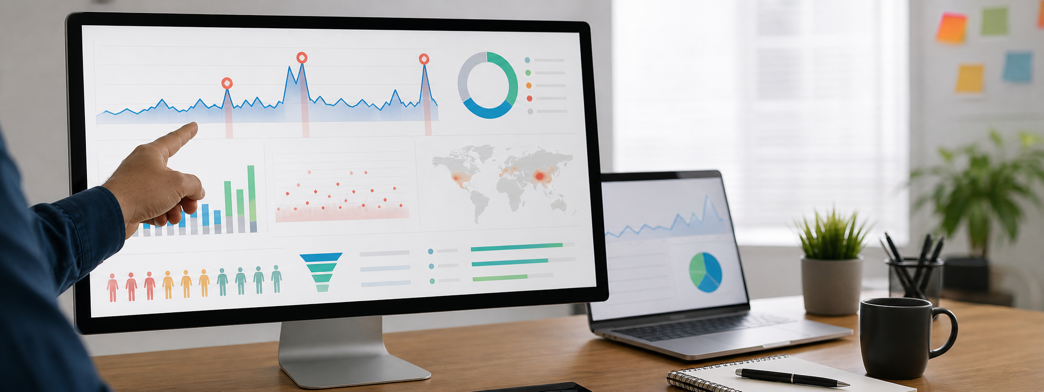
How to Reduce Fake Clicks in Google Ads
Google Ads analytics dashboard detecting fake clicks, invalid traffic, and campaign performance
Google Ads can be one of the most effective ways to attract new customers. However, not every click represents genuine interest. Fake clicks, accidental clicks, and invalid traffic can quickly consume advertising budgets without generating meaningful results.
While Google automatically detects and filters many forms of invalid traffic, businesses should still take proactive steps to protect their campaigns and ensure their advertising spend is reaching real potential customers.
What Are Fake Clicks?
Fake clicks refer to ad interactions that do not come from genuine customers.
These clicks may be generated by competitors, bots, click farms, or users who repeatedly click on ads without any intention of making a purchase or submitting an inquiry.
Common sources of invalid traffic include:
- Automated bots
- Click farms
- Competitor clicks
- Accidental clicks
- Fraudulent traffic from low-quality websites
- Repeated clicks from the same users
Even when some of these clicks are filtered automatically, excessive invalid traffic can still affect campaign performance and reporting.

Why Fake Clicks Matter
Every unnecessary click can reduce the efficiency of your advertising budget.
When a significant portion of your traffic comes from invalid sources, businesses may experience:
- Higher advertising costs
- Lower return on ad spend
- Reduced conversion rates
- Misleading campaign performance data
- Less budget available for real customers
Accurate traffic is essential for making informed marketing decisions.
Monitor Your Traffic Quality
The first step in reducing fake clicks is understanding where your traffic comes from.
Regularly review campaign reports to identify unusual patterns, such as:
- Unexpected spikes in clicks
- High click-through rates with few conversions
- Large numbers of clicks from a single location
- Repeated clicks from the same IP address
- Sessions with extremely short visit durations
Identifying suspicious behavior early allows businesses to take corrective action before unnecessary costs increase.
Refine Your Targeting
Broad targeting can expose campaigns to audiences that are unlikely to convert.
Improving your campaign settings can help reduce low-quality traffic by narrowing who sees your ads.
Consider refining your campaigns by:
- Targeting specific geographic locations
- Excluding regions that generate poor-quality traffic
- Using audience targeting
- Scheduling ads during high-performing hours
- Applying negative keywords to eliminate irrelevant searches
Better targeting often leads to higher-quality clicks and improved campaign performance.

Focus on Conversion Metrics
A campaign with a high number of clicks is not always successful.
Instead of optimizing for traffic alone, businesses should prioritize metrics that reflect real business outcomes.
Useful performance indicators include:
- Conversion rate
- Cost per conversion
- Return on ad spend
- Qualified leads
- Revenue generated
- Customer acquisition cost
These metrics provide a clearer picture of campaign effectiveness than click volume alone.
Use Landing Pages That Match User Intent
When ad copy and landing pages are closely aligned, visitors are more likely to engage with your business.
Relevant landing pages improve user experience while making it easier to distinguish genuine customer interest from low-quality traffic.
Clear messaging, fast loading times, and simple calls to action also contribute to stronger conversion performance.
Continuously Review Campaign Performance
Google Ads campaigns should not be treated as "set and forget" marketing.
Regular performance reviews help businesses identify unusual traffic patterns, improve targeting, adjust bidding strategies, and optimize budgets over time.
Small adjustments made consistently often deliver better long-term results than major changes made infrequently.

Connect Advertising Data with Business Insights
Advertising data becomes far more valuable when combined with information from your CRM, website analytics, sales data, and customer interactions.
Looking beyond clicks allows businesses to understand which campaigns generate qualified leads, repeat customers, and long-term revenue.
A connected view of marketing performance supports better decision-making and more effective budget allocation.
How WDC Studio Helps Improve Marketing Performance
WDC Studio brings together advertising data, website analytics, customer information, and business reporting in one centralized platform.
By connecting marketing performance with sales and customer insights, businesses gain a clearer understanding of which campaigns generate real business results. Interactive dashboards and real-time reporting help teams monitor campaign performance, identify trends, and make faster, data-driven decisions.
Instead of relying on disconnected reports, WDC Studio provides a unified view that supports smarter marketing strategies and better use of advertising budgets.
Build Campaigns Around Quality, Not Just Clicks
Reducing fake clicks is not only about protecting your advertising budget. It is about improving the overall quality of your marketing efforts.
By monitoring traffic, refining targeting, focusing on meaningful performance metrics, and connecting advertising data with business insights, businesses can create campaigns that reach the right audience and generate measurable results.
The more visibility you have into your marketing data, the easier it becomes to invest confidently, optimize continuously, and achieve sustainable growth.