 WDC Pos
 Sales Hub
 Product Hub
 Inventory Management
 Whatsapp Marketing
 Marketing Automation
 Browser Notification
 Email Marketing
 Fusion Mail
 SMS Marketing
 Fusion SMS
What Is a Modular Business Software Platform?
Discover how a modular business software platform connects operations, reduces manual work, improves visibility, and grows with your business.
As businesses grow, so do their operational needs. What starts with a single software solution often evolves into a collection of disconnected tools for sales, inventory, finance, customer management, reporting, and communication. While each system may solve a specific problem, managing them together can become increasingly complex.
A modular business software platform offers a different approach. Instead of replacing every system or forcing businesses into a one-size-fits-all solution, it allows companies to build a technology ecosystem that matches their unique needs.
Understanding Modular Business Software
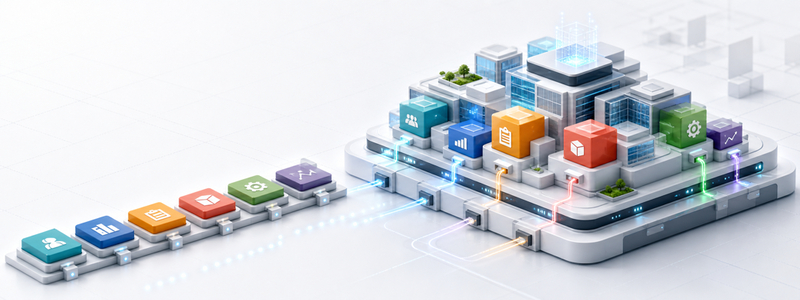
A modular business software platform is built around independent applications, or modules, that work together within a single system.
Each module focuses on a specific business function, such as customer management, inventory, purchasing, analytics, reporting, or workflow automation. Businesses can choose the modules they need today and add new ones as their operations grow.
Because every module is connected, information flows across the platform without requiring manual updates or duplicate data entry.
Why Traditional Software Can Become a Challenge
Many businesses rely on multiple software applications that were purchased at different stages of growth. Over time, these systems often operate independently, creating data silos and unnecessary complexity.
Common challenges include:
- Duplicate data entry
- Disconnected workflows
- Inconsistent reporting
- Limited visibility across departments
- Time-consuming manual processes
- Difficult system integrations
As the number of tools increases, managing operations becomes more complicated instead of more efficient.
The Benefits of a Modular Approach
A modular platform gives businesses the flexibility to grow without replacing their existing technology every few years.
Some of the key advantages include:
- Start with only the features you need
- Add new modules as your business evolves
- Keep data connected across departments
- Reduce manual work and repetitive tasks
- Improve collaboration between teams
- Scale without disrupting daily operations
This flexibility makes modular platforms suitable for businesses of different sizes and industries.
Centralize Your Business Operations
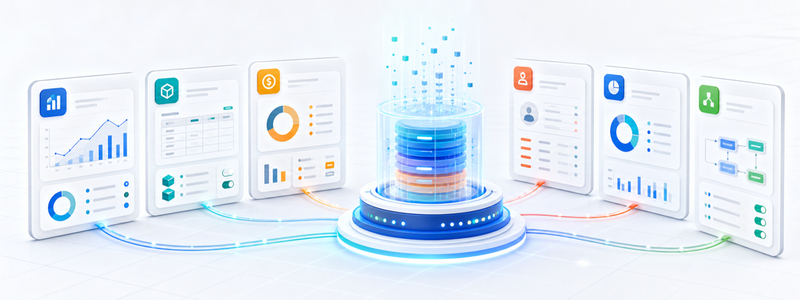
One of the biggest advantages of a modular platform is having a single source of truth for your business data.
Instead of switching between different applications, teams can access the information they need from one centralized environment.
This creates better visibility across operations while improving communication between departments.
Whether someone is reviewing sales performance, managing inventory, tracking customer activity, or analyzing business trends, everyone works with the same up-to-date information.
Improve Efficiency Through Automation
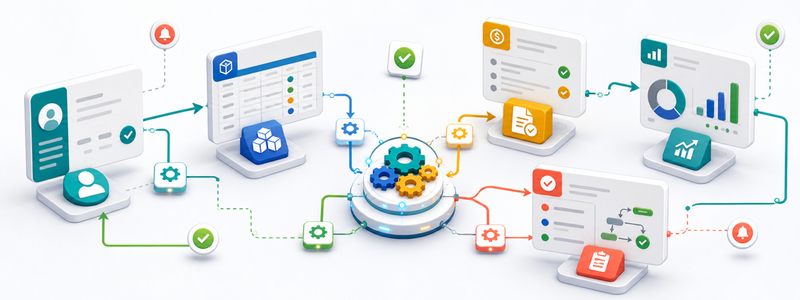
When business systems are connected, many routine tasks can be automated.
For example, inventory updates can trigger purchasing workflows, customer information can sync across different departments, and business dashboards can update automatically as new data becomes available.
Automation helps businesses:
- Save time
- Reduce human error
- Increase productivity
- Standardize business processes
- Make faster decisions
Instead of spending time moving information between systems, teams can focus on activities that create value.
Adapt as Your Business Grows
Business needs rarely stay the same.
A company may begin with customer management and reporting, then later require inventory management, purchasing, workflow automation, or advanced analytics.
With a modular platform, new capabilities can be added without replacing the entire system or disrupting existing operations.
This makes technology investments more sustainable over the long term.
Support Better Decision-Making
Reliable decisions depend on reliable data.
Because a modular platform centralizes information from different business functions, leaders gain a more complete view of business performance.
Real-time dashboards and reporting help businesses monitor key metrics, identify trends, and respond more quickly to changing conditions.
Instead of collecting data from multiple sources, decision-makers have immediate access to the insights they need.
How WDC Studio Supports Modular Business Management
WDC Studio is built around a modular architecture that allows businesses to create a software ecosystem tailored to their operations.
Organizations can choose the services they need, connect their business data in one platform, and expand their digital capabilities over time without disrupting existing workflows.
From analytics and reporting to workflow management and business automation, WDC Studio provides connected services that work together to simplify operations and improve visibility across the organization.
Final Thoughts
Every business operates differently, and software should be flexible enough to support that reality.
A modular business software platform gives organizations the freedom to adopt the capabilities they need today while remaining ready for tomorrow's growth. By centralizing data, connecting business functions, and allowing new services to be added over time, businesses can reduce complexity, improve efficiency, and make more informed decisions.
Rather than adapting your business to fit your software, a modular platform allows your software to grow with your business.