 WDC Pos
 Sales Hub
 Product Hub
 Inventory Management
 Whatsapp Marketing
 Marketing Automation
 Browser Notification
 Email Marketing
 Fusion Mail
 SMS Marketing
 Fusion SMS
Browser Notification Message Examples: 50 Ideas for Campaign, Cart, Stock and Win-back Flows
Use 50 browser notification message ideas for campaigns, carts, stock alerts, price drops, loyalty, and win-back flows.
Browser Notification Message Examples: 50 Ideas for Campaign, Cart, Stock and Win-back Flows focuses on a specific decision that e-commerce and CRM teams face when they use browser notifications. The channel can create traffic, recover demand, and support repeat purchase, but only when the message matches the user’s intent. This article explains the topic in practical terms and connects it to WDC Browser Notification.
browser notification message examples should be treated as a permission-based customer communication channel, not a bulk traffic shortcut. The best programs connect a clear customer trigger with a specific page, such as a cart, a product, a category, an order update, or a recommendation. That structure helps users understand the message and helps search engines understand the page topic.
The business problem
Most teams do not struggle because they lack another channel. They struggle because customer attention disappears between visits. Browser notification helps close that gap when the user has already shown interest and the message gives them a useful reason to return.
A strong notification program starts with a real customer action: viewed product, abandoned cart, saved item, price watch, loyalty balance, or repeat purchase cycle. The action tells the team which message belongs in the browser notification.
Planning the message
A notification needs one job. It can remind, alert, recommend, or confirm. It should not try to explain the whole campaign. The headline should carry the reason to care, the body should add context, and the click should lead to the exact page promised in the message.
Cart recovery needs timing and checkout context. Channel comparison needs speed, cost, and use-case clarity. Technical implementation needs permission, service worker, and delivery details in plain language.
Segmentation
Segment rules protect the channel from becoming noisy. Use behavior, lifecycle stage, purchase history, product interest, stock status, and campaign source. A visitor who browsed one category needs a different prompt than a loyal customer waiting for a price drop.
The notification click should lead to the page promised by the message. A cart reminder belongs on the cart page. A stock alert belongs on the product page. A recommendation belongs on a product list that reflects the user’s behavior.
User experience
The permission request, send time, frequency cap, and landing page all shape trust. If the user receives too many messages or lands on a page that does not match the notification, the channel loses value. A small number of relevant notifications beats a broad send list.
Audience rules keep the channel useful. A returning shopper, a loyalty member, and a first-time visitor should not receive the same message unless they share the same intent.
Measurement
Track opt-in rate, CTR, conversion, revenue, unsubscribe rate, and repeat purchase behavior. Compare segments instead of judging the channel as one average. The best learning often comes from seeing which message type works for which customer state.
Product screenshots, anonymized campaign results, real message variants, and before-after flows make browser notification strategy easier to evaluate before launch.
WDC role
WDC Browser Notification can support this workflow by connecting notification campaigns with audience logic and customer journey triggers. The service becomes stronger when teams pair it with marketing automation, product recommendations, and clear reporting.
Search queries and engagement data reveal which use cases deserve more space. If cart recovery queries bring the most qualified visits, cart examples should carry more of the page.
Message examples
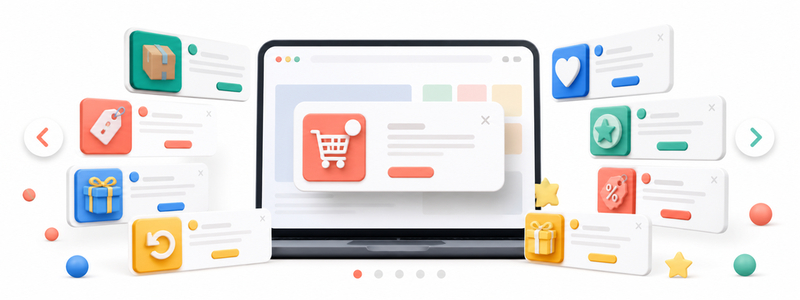
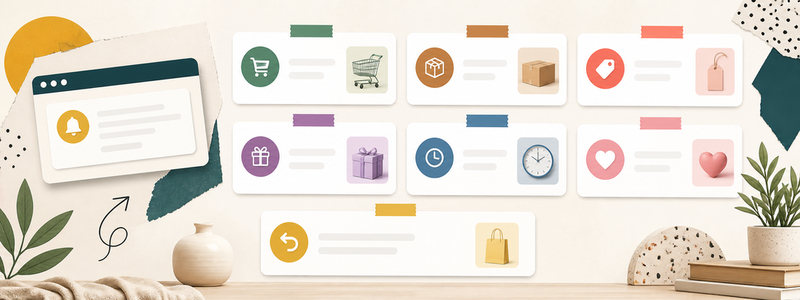
- Cart: The item you chose is still in your cart.
- Back in stock: Your saved product is available again.
- Price drop: A product you viewed now has a lower price.
- Loyalty: Your member benefit is ready to use.
- Win-back: New arrivals match the category you viewed.
KPIs to track
| KPI | What it tells you | What to improve |
|---|---|---|
| Opt-in rate | How many visitors grant permission | Prompt timing and value promise |
| CTR | How many subscribers click | Segment, headline, offer, and send time |
| Conversion rate | How many clickers complete the goal | Landing page match and checkout friction |
| Unsubscribe rate | Whether frequency or relevance is hurting trust | Caps, suppression rules, and message quality |
Implementation checklist
- Define the user action that should trigger the notification.
- Write one message for one segment instead of one message for the whole audience.
- Set a frequency cap before the first campaign goes live.
- Match the click destination to the exact promise in the notification.
- Track conversion and unsubscribe behavior together.
Common mistakes to avoid
The most common mistake is asking for permission before the visitor understands the benefit. The second is sending campaign messages to every subscriber because the list exists. A third mistake is measuring only clicks. A notification program should protect trust, help the user return to a relevant page, and create a measurable business result.
Another weak pattern is using urgency when there is no real urgency. Fake countdowns and vague scarcity may earn short-term clicks, but they train users to distrust the channel. Use urgency for stock, campaign deadlines, delivery cutoffs, and time-limited benefits that the customer can verify on the landing page.
FAQ
Is browser notification the same as push notification?
Browser notification is a web-based form of push notification. It uses browser permission and web push infrastructure instead of a native mobile app install.
Should every subscriber receive every notification?
No. Send notifications by segment, behavior, and message intent. Broad sends create fatigue and reduce long-term channel value.
Where should the notification click go?
The click should lead to the page promised by the message: cart, product, category, account, order, or recommendation page.
Customer fatigue usually comes from weak targeting, not from the notification format itself. A brand can protect the channel by excluding recent buyers from acquisition offers, suppressing users who ignored several messages, and pausing segments after an unsubscribe signal.
Technical complexity becomes manageable when each role owns a clear part of the system. Product teams handle permission and page behavior, marketing teams define segments and copy, and analytics teams connect clicks to purchases, revenue, and opt-outs.
WDC Browser Notification can support campaign setup, audience targeting, automation, measurement, and customer journey orchestration. That makes the service relevant when a team wants to move from occasional broadcasts to behavior-based notification flows.
Decision rules make the channel easier to manage. Timing rules decide when the first and second reminders go out. Segmentation rules decide who receives the message. Measurement rules decide whether a flow deserves more volume or a rewrite.
A new visitor should not see a browser permission prompt before the store has earned attention. Show the product range, delivery promise, or campaign value first; then use browser notification message examples to offer alerts that match the page they explored.
Returning shoppers give the brand useful context. If they viewed the same category twice, browser notification message examples can bring them back to that category with a relevant product cue instead of a generic sale announcement.
Cart abandoners need a shorter path, not a louder message. The strongest recovery notification sends them back to the cart with products, price, and checkout step preserved.
Price watchers respond to honesty. Send the notification when the price change is real, show the product that changed, and avoid discount language that the landing page cannot prove.
Back-in-stock alerts work when the variant matches. Size, color, location, or subscription preference should feed the message so the user does not click into another unavailable product.
Loyalty members need reminders tied to usable value. Points, early access, birthday rewards, or member-only stock alerts can make browser notification message examples feel like a benefit rather than a campaign push.
Dormant customers need a reason to return. A new collection, a replenishment reminder, or a product improvement often feels more credible than a broad discount after months of silence.
High-value baskets deserve margin protection. Before offering a coupon, test service messages such as free delivery thresholds, return reassurance, payment options, or stock reservation.
Mobile visitors need short copy and fast pages. A notification can win the click, but the product page must load fast enough for the user to continue the action without friction.
Campaign visitors should receive messages that match the offer that brought them in. If the entry point was a seasonal sale, the notification should use the same category, deadline, or benefit.
Product researchers often need confidence cues. Review snippets, comparison notes, availability, warranty, or delivery details can make the next notification more useful than another price line.
Repeat buyers create timing signals. Replenishment reminders, complementary product suggestions, and category refresh alerts work better when they follow the customer’s normal purchase rhythm.
Support-sensitive customers need clarity after the click. Delivery, return, warranty, and payment details should be easy to find on the destination page before the customer is asked to buy.
AI recommendation flows can turn browsing signals into product suggestions. browser notification message examples becomes stronger when the recommendation reflects recent intent rather than a static bestseller list.
Seasonal shoppers care about deadlines they can verify. Shipping cutoff, campaign end, store pickup windows, and limited stock should appear only when the destination page confirms the same detail.
Content readers may not be ready to buy. Guide updates, category education, or product comparison alerts can keep the relationship useful until purchase intent becomes clearer.
Category browsers should return to curated pages. A notification that opens a relevant collection works better than one that sends the user back to the homepage.
First-time buyers need trust before urgency. Payment security, delivery promises, return policy, and customer support details can reduce hesitation better than a rushed discount.
VIP customers should receive benefits that feel earned. Early access, reserved stock, or member-only recommendations can support exclusivity without sounding artificial.
Low-stock viewers need accurate context. State the stock situation clearly, avoid fake scarcity, and send the user to the exact item that triggered the alert.
Checkout visitors respond to fewer decisions. If the user left after choosing payment or delivery, the next notification should remove uncertainty rather than introduce a new offer.
Category sale alerts need clean targeting. A user who browsed running shoes should not receive the same message as a user who browsed formal wear unless the campaign covers both categories with separate landing paths.
Order-related notifications should stay separate from promotional flows. Delivery updates, pickup reminders, and return instructions build trust when they do not compete with discount messages.
Product launch notifications work best for users who showed interest in the category before launch. A small qualified audience often beats a large subscriber list with weak intent.
Permission timing deserves its own test plan. Product pages, cart pages, account areas, and campaign landing pages each create a different reason to subscribe, so the prompt should use the value the visitor can already see.
Send frequency should follow customer state, not only campaign pressure. A user who ignored two cart reminders needs a pause or a different message, while a price watcher may still welcome a single verified price update.
Landing page quality determines whether the click becomes revenue. The page should confirm the same product, price, stock status, delivery promise, or benefit named in the notification before asking the user to make another decision.
Message clarity improves when the team removes extra campaign language. The notification needs a specific trigger, a short reason to return, and a destination that proves the message was worth opening.
Audience exclusions are as important as audience inclusions. Recent buyers, open support cases, unavailable variants, and users who opted out of a related flow should be filtered before the campaign reaches them.
Stock accuracy protects trust. A back-in-stock message should only go out when the selected size, color, or location is available, and the product page should show that availability the moment the user lands.
Campaign deadlines should be visible after the click. If the notification mentions a sale ending tonight, the landing page should carry the same deadline so the message feels honest instead of manufactured.
Checkout speed matters because notification intent can fade quickly. Keep carts intact, preserve product choices, and remove avoidable steps between the notification click and payment completion.