
 WDC Pos
 Sales Hub
 Product Hub
 Inventory Management
 Whatsapp Marketing
 Marketing Automation
 Browser Notification
 Email Marketing
 Fusion Mail
 SMS Marketing
 Fusion SMS
Retail Inventory Management: Common Problems and How to Fix Them
Discover common inventory management challenges and learn how real-time visibility, automation, and data-driven insights help retailers optimize stock and improve profitability.
Inventory is one of the most valuable assets in any retail business. Keeping the right products in stock at the right time has a direct impact on sales, customer satisfaction, and profitability.
Yet inventory management remains one of the biggest operational challenges for retailers. Too much stock ties up cash and storage space, while too little stock leads to missed sales and disappointed customers.
Fortunately, many of the most common inventory issues can be solved with better visibility, automation, and data-driven decision-making.
Why Inventory Management Matters
Effective inventory management is about more than tracking stock levels. It helps retailers maintain product availability, reduce waste, improve cash flow, and respond more quickly to customer demand.
When inventory is managed efficiently, businesses can:
- Minimize stock shortages
- Reduce excess inventory
- Improve order accuracy
- Increase customer satisfaction
- Make more informed purchasing decisions
Without a clear inventory strategy, even growing retailers can face unnecessary costs and operational disruptions.
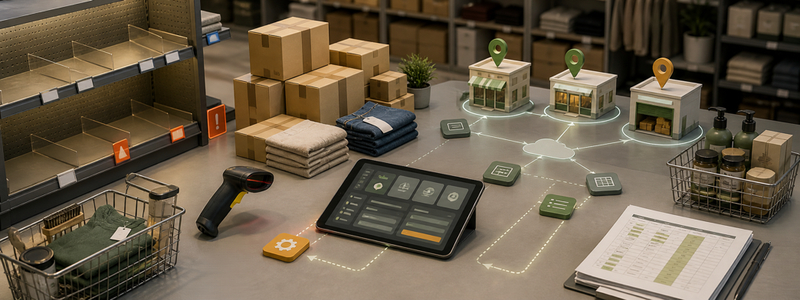
Problem 1: Stockouts
Running out of popular products is one of the most common inventory challenges.
Stockouts often result in lost sales, frustrated customers, and missed opportunities to build loyalty. Customers who cannot find the products they need may choose a competitor instead.
How to Fix It
Monitor inventory levels in real time and set automatic reorder points based on sales trends and demand forecasts. Reviewing inventory regularly also helps identify products that require closer attention before stock reaches critical levels.
Problem 2: Overstocking
Buying more inventory than necessary can be just as costly as running out of stock.
Excess inventory increases storage costs, ties up working capital, and may eventually require heavy discounts to clear slow-moving products.
How to Fix It
Use historical sales data to forecast demand more accurately. Review inventory turnover regularly and adjust purchasing decisions based on actual sales performance rather than assumptions.
Problem 3: Inaccurate Inventory Records
Inventory records can quickly become unreliable due to manual data entry, delayed updates, damaged products, or unrecorded stock movements.
When inventory data is inaccurate, purchasing decisions become less reliable and customer expectations become harder to meet.
How to Fix It
Automate inventory updates whenever possible and synchronize stock information across every sales channel. Regular inventory audits and cycle counts also help maintain data accuracy.
Problem 4: Poor Visibility Across Locations
Retailers operating multiple stores or warehouses often struggle to understand where inventory is available.
Without centralized visibility, one location may experience shortages while another holds excess stock.
How to Fix It
Use a centralized inventory management system that provides real-time visibility across every location. This allows teams to transfer inventory efficiently and make better purchasing decisions.
Problem 5: Slow-Moving Inventory
Not every product sells at the same pace.
Slow-moving inventory occupies valuable shelf space and reduces available cash that could be invested in faster-selling products.
How to Fix It
Identify products with low sales velocity and develop strategies to improve turnover. Promotions, product bundles, seasonal campaigns, or revised purchasing plans can help reduce excess inventory before it becomes obsolete.
Problem 6: Manual Inventory Processes
Many retailers still rely on spreadsheets or disconnected systems to manage inventory.
Manual processes increase the likelihood of errors, consume valuable time, and make it difficult to respond quickly to changing demand.
How to Fix It
Automate inventory tracking, purchasing workflows, and reporting wherever possible. Connected systems reduce repetitive work while improving operational accuracy.

Use Data to Make Better Inventory Decisions
Successful inventory management depends on more than simply tracking stock levels.
Retailers should regularly monitor key performance indicators such as:
- Inventory turnover
- Stock availability
- Sell-through rate
- Reorder frequency
- Product demand trends
- Gross margin by product category
These insights help businesses make smarter purchasing decisions and improve overall inventory performance.
How WDC Studio Helps Simplify Inventory Management
WDC Studio gives retailers a centralized view of inventory across stores, warehouses, and connected business systems.
With real-time inventory visibility, automated workflows, and integrated reporting, businesses can reduce manual work, improve stock accuracy, and respond more quickly to changing customer demand.
By connecting inventory with sales, purchasing, and business analytics, WDC Studio helps retailers make better operational decisions while improving efficiency across the organization.
Better Inventory Leads to Better Business Performance
Inventory management is not simply about knowing what is on the shelf. It is about ensuring products are available when customers need them while keeping operations efficient and costs under control.
By improving inventory visibility, automating routine processes, and using real-time business data, retailers can reduce common inventory challenges and build a more responsive, profitable business.